
The Sui Lab
Our RESEARCH
Current & Future Projects on Social Self Cognition

Measuring the Self
How can psychologists test your sense of self?
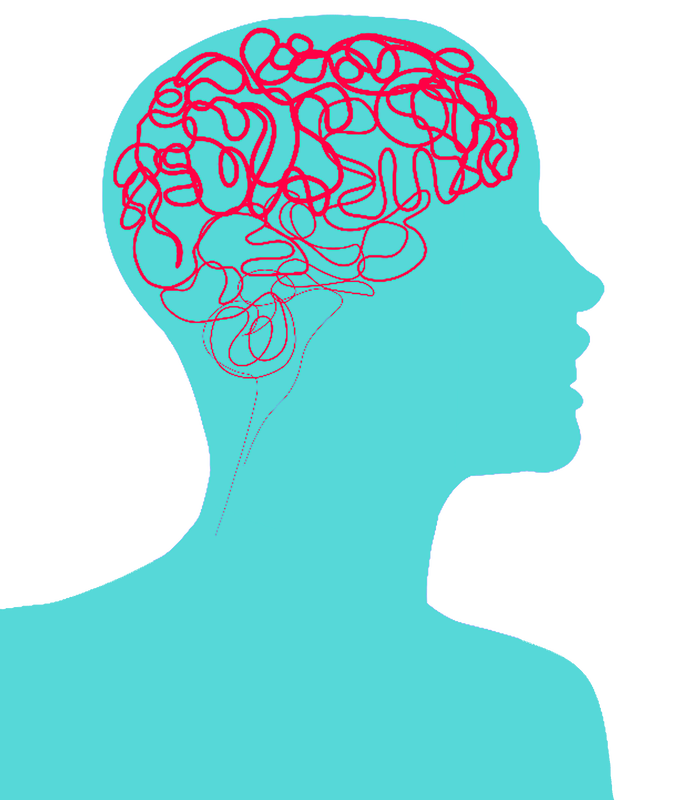
The self is an elusive concept which is not easily described or measured. For decades, psychologists have relied on asking people what they think their self is to research the self. To illustrate just how difficult it is to describe the self objectively, try answering these questions:
- What is your self?
- What does your self feel like?
- Which senses do you use to perceive your self?
Can you come up with objective answers that might help a psychologist?


Our Projects
The Spatial Self in Virtual Reality
People tend to perform better when they process information with higher self-relevance. This study uses cutting-edge virtual reality (VR) techniques to evaluate how self-relevance changes perception in a three-dimensional environment, such as distance estimation. A set of experiments tests whether people have lower estimation error when judging the distance between a self-related object and themselves. We are also interested in cultural differences, since people from different cultures show different levels of bias when processing self-related information. For example, people from China often regard their parents as part of the self, and therefore show self-biases for parent-related information.

The Future Self and Long-Term Behaviour
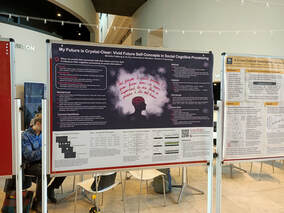
You might sometimes imagine your future to guide life decisions without questioning whether that is reasonable. Can you reliably predict your future? Can you include your future self in your self-view? People who find it easy to identify with their future self tend to make better long-term decisions, such as saving for the future or preparing for exams. This project uncovers the theoretical foundations of future-self thinking. Participants may be asked to imagine their future self following our instructions. We hope to determine how future self-concepts can be constructed to improve identification with the future self and, ultimately, long-term behaviour.
Sense of Agency and Episodic Memory
When we do something, such as moving a hand or making a choice, we usually feel that we are the one making it happen. That sense of control matters because it boosts confidence and helps us trust our abilities. Another essential part of being human is remembering past moments: the personal stories that shape who we are. This project examines how the feeling of being in control is connected with the ability to remember our experiences. When our actions bring about a result, the mind may store the event like a clear story with a beginning and an outcome. By understanding this link, we hope to find better ways to help older people keep their memories strong and to support more effective learning for everyone.

Trust Updating in Early Childhood
Trust is fundamental to children’s social and cognitive development, forming the cornerstone of healthy relationships and psychological wellbeing. For healthy adaptation, children must continuously update their trust in response to social information. However, it is largely unknown how the valence of social information, whether positive or negative, affects trust updating, and how this process is influenced by trust traits, attachment security, and family factors. This project investigates the computational and neural mechanisms underlying trust updating in young children aged three to eight through behavioural and EEG studies. Virtual reality may also be used in the future.
A Deep Learning Approach to Self-Prioritization Processing
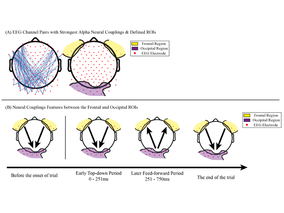
People show biases toward themselves when processing information, known as self-prioritisation. Specialised brain regions play a fundamental role in this effect, but how the regions cooperate remains unknown. This study used novel technologies to explore how brain regions connect while processing self-related information, and artificial intelligence to classify neural signals automatically. The results indicate that specialised fronto-occipital regions process self-related information and quickly convert it into response biases. The successful application of AI motivates us to evaluate links between neural features and psychological effects efficiently and automatically.

The Distinctiveness of the Self in Self-Biases
We all like to think of ourselves as selfless, while society looks down on people deemed self-centred. Yet centuries of survival have shaped us to prioritise information about ourselves. These self-centred acts become easier to understand when we view the self as a central grounding point from which we experience life. This thesis considers mechanisms that produce self-biases and examines how prioritised self-processing changes when other motivational factors, such as positivity and reward, are in play. Particular attention is given to the way self-processing alters to help us maintain a positive view of ourselves.
Get In Touch
Still have unanswered questions? Send us a message about research, participating, or collaborating.